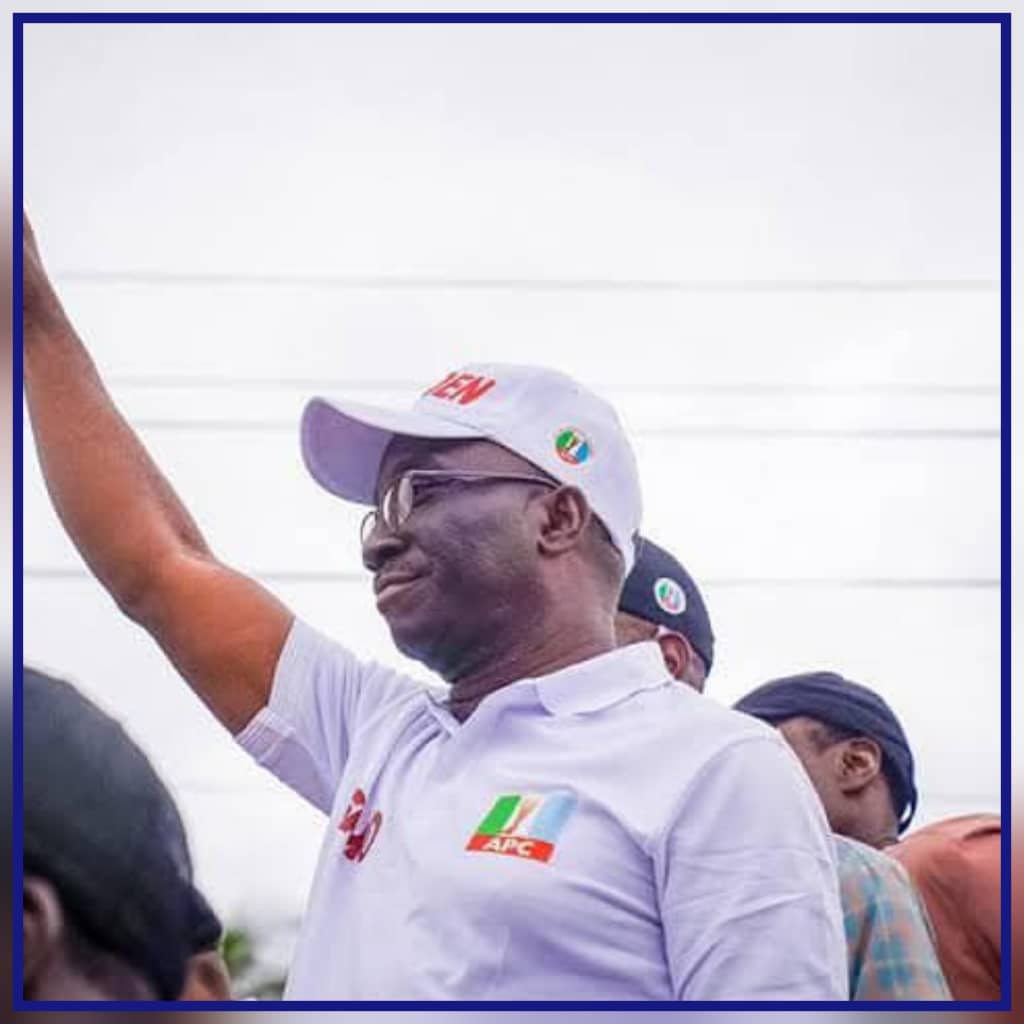
Infrastructure stands as the cornerstone of Governor Monday Okpebholo’s aspiration for a contemporary Edo State.
Acknowledging the pivotal role of superior roadways in fostering both economic prosperity and enhanced societal welfare, his administration has initiated a comprehensive program focused on road construction and refurbishment.
Statewide, dedicated teams are assiduously rehabilitating existing routes and developing novel transport arteries, thereby uniting communities and expediting the transit of both merchandise and individuals.
Beyond roadways, Okpebholo is also channeling considerable resources into other indispensable infrastructural domains, including power generation, water provision, and sanitation systems.
These strategic allocations are engineered to elevate the standard of living for all Edo residents while cultivating a more compelling ecosystem for commercial enterprises and prospective investors.
The governor appreciates that a progressive Edo necessitates advanced infrastructure, and he remains steadfastly committed to translating this vision into tangible reality.
Okpebholo’s emphasis on infrastructure transcends mere construction projects; it embodies a commitment to sculpting a more promising horizon for Edo State.
By strategically investing in fundamental infrastructure, he is not only generating employment opportunities and invigorating economic expansion, but also enriching the overall quality of life for every resident.
He maintains an unwavering conviction that a modern Edo is attainable, and he dedicates himself daily to actualizing this transformative ambition.
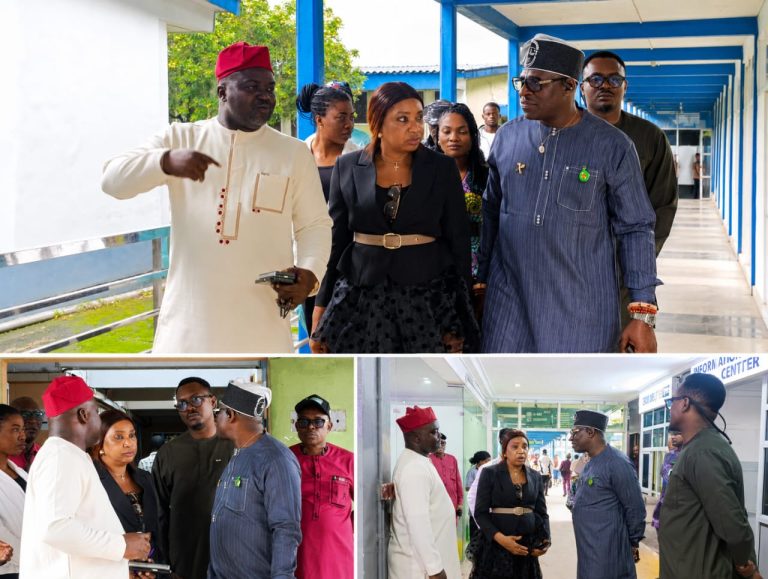
During his inspection of the Okpagha-Amufi Road and adjoining water retention and drainage infrastructure, Governor Okpebholo openly acknowledged the neglect experienced by residents. “The people that live on this road are voiceless,” he said, describing communities that had gone years without meaningful government attention.
The statement resonated strongly because it reflected a rare public admission that some parts of the state had been overlooked for far too long.
The governor further explained that constructing the road and addressing the flooding challenge represented part of his responsibility to the people.
“Constructing this road for them is a thing of joy. If we don’t do it, who will?” he asked while speaking at the project site.
The Okpagha-Amufi intervention extends beyond ordinary road construction. The project includes drainage expansion, water retention infrastructure, and erosion control measures designed to provide lasting environmental protection for surrounding communities.
Engineers supervising the project have explained that the broader road and erosion control network spans several kilometres and covers multiple adjoining communities.
For residents who endured repeated flooding for decades, the project represents far more than asphalt and concrete. It represents visibility, inclusion, and government presence in places that once felt forgotten.
The administration’s broader infrastructure efforts follow the same pattern across the state. In flood-prone parts of Benin City, drainage expansion projects are being executed to reduce the destructive effects of heavy rainfall. Areas that previously became impassable during the rainy season are gradually receiving long-overdue intervention. The stormwater drainage project leading into the Ikpoba River remains one of the administration’s largest environmental infrastructure projects, aimed at redirecting floodwater away from densely populated communities. Across several road corridors, reconstruction work is simultaneously improving mobility and reducing years of infrastructural deterioration.
Governor Okpebholo has repeatedly acknowledged that he inherited serious infrastructural challenges upon assumption of office. According to him, bad roads, insecurity, flooding, and weak public infrastructure were among the realities confronting the administration from the beginning. “Bad roads across Edo State are one of the things I inherited,” the governor stated during one of his project inspections. Rather than focusing on blame, however, the administration says it has concentrated on rebuilding damaged infrastructure and restoring confidence in governance through visible projects. That approach has become central to the administration’s public messaging.
Beyond Benin City, road rehabilitation and construction efforts are also ongoing across other parts of Edo State. The administration insists infrastructure development must not be limited to urban centres alone. Rural communities require functional roads to support agriculture, trade, education, and healthcare delivery. In many farming communities, poor road conditions have historically made it difficult for farmers to transport produce to urban markets. Government officials argue that improving rural road networks is critical to economic growth, food production, and job creation.
The governor has also linked the pace of development in Edo State to support from the Federal Government under President Bola Ahmed Tinubu’s Renewed Hope Agenda. Governor Okpebholo has repeatedly acknowledged federal support for ongoing infrastructure projects and expressed appreciation to the President for assisting the state’s development efforts. “I am grateful to the President for providing the funds to carry out these projects,” the governor said during another inspection exercise. According to the administration, collaboration between the state and federal governments has helped accelerate ongoing construction activities across Edo State.
While infrastructure remains the most visible aspect of the administration’s agenda, the government insists development efforts also extend to education, healthcare, and security. Governor Okpebholo earlier declared a state of emergency in the education sector after personally inspecting several public schools in poor condition. According to him, many of the facilities visited reflected years of neglect and required immediate intervention. Renovation and rehabilitation projects have since commenced in parts of the education sector, while healthcare facilities are also receiving upgrades.
Still, infrastructure projects continue to dominate public attention because of their visibility and direct impact on daily life. Across Edo State, bulldozers, construction workers, drainage channels, road rehabilitation teams, and flyover projects now form part of the physical landscape. In several communities visited during inspection tours, residents gathered along roadsides to welcome the governor and observe the ongoing projects. Supporters of the administration believe the visible nature of the projects explains the increasing public confidence surrounding the government’s activities.
For Governor Okpebholo, infrastructure renewal is not simply about roads and concrete. It is about restoring public trust, reconnecting neglected communities, improving economic activity, and rebuilding confidence in governance. From the flyovers rising above major corridors in Benin City to the drainage systems reclaiming flood-prone neighbourhoods and the Okpagha-Amufi communities finally receiving long-awaited intervention, the administration believes the foundation for a modern Edo is already being laid. The governor insists the transformation is no longer a future promise but an ongoing process visible across the state. A Modern Edo is already under construction!
Dr. Ebojele is the Chief Press Secretary to Governor Monday Okpebholo of Edo State